
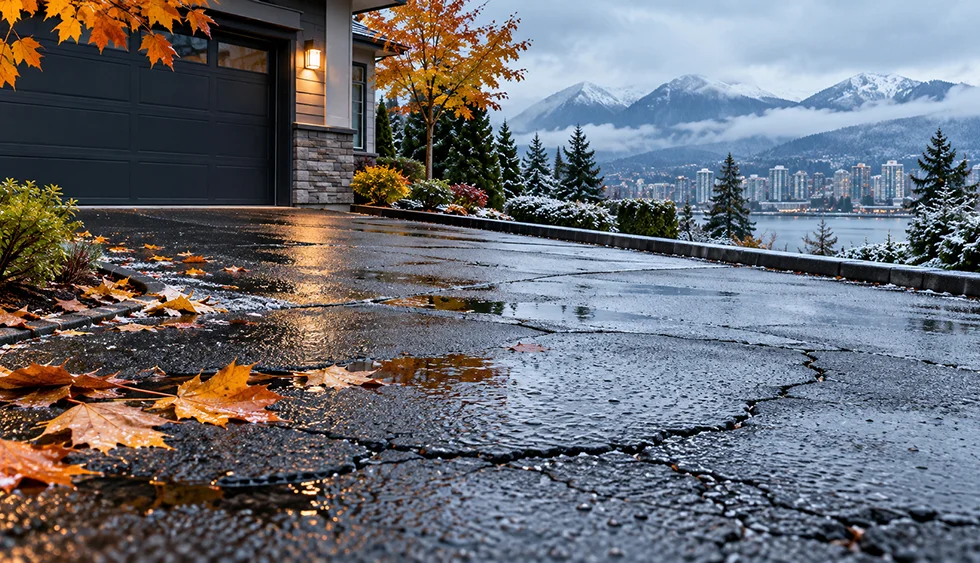
How to Prepare Your Asphalt Driveway or Parking Lot for a Wet Vancouver Winter
Vancouver’s winters are rarely characterized by months of frigid temperatures, but they can be difficult on your asphalt. Rain, occasional cold snaps, and periods of freezing and thawing can be hard on the roadways. The good news is that most winter weather damage begins small, and can be prevented with some proactive work in the fall.
Here’s what you need to do before the rainy season gets underway.
Why Winter Is Tough on Asphalt
While flexible, water can be asphalt’s undoing. Water accumulates in any crack or depression and trickles down to the bottom layer. It will often expand the crack while it is frozen overnight (when the temperature falls below freezing). After thawing, the crack will be wider and will contain more water for the next cycle.
This process can happen numerous times throughout the winter. The result is a pothole the size of a small truck. On the other hand, if standing water is unable to drain away, it will soften the pavement and the base layer much more gradually.
That’s why the best winter prep comes down to one idea: keep water out and let it drain away.
Step 1: Walk the Surface and Look for Cracks
Do a slow walk around your driveway or lot on a dry day. You’re looking for:
- Hairline cracks and wider cracks
- Spiderweb or “alligator” patterns, which can point to base problems
- Potholes or soft, crumbling edges
- Low spots where puddles linger after rain
- Fading or a dry, grey surface
Take photos so you can compare in spring. If you aren’t sure what you’re looking at, our guide to signs your asphalt driveway needs repair covers the most common warning signs.
Step 2: Seal Cracks Before the Rain Gets In
The one most important fall activity that you can do is crack sealing. Sealing a narrow crack will prevent water from getting in to the base and it will be much less expensive than repairing a pothole.
Cracks that measure no more than a few inches wide and do not have any sunken spots or sections of pavement that have started to erode are good candidates for sealing, while larger cracks, any sunken spots and sections of pavement that have begun to erode should be patched or repaired in part. October is a better time to apply sealant than January because it needs to be applied during dry weather. Our asphalt paving maintenance service covers crack sealing, patching and drainage repair for properties across Metro Vancouver.
Step 3: Fix Potholes and Failed Patches Early
A pothole in a dry month is one thing, it is a hazard in a wet winter. It catches water and car tyres wear the rims, thus enlarging it by the week.
If the same area continues to get pothole repairs, then it’s probably a problem with the foundation. A repair that is more thorough and longer lasting to fix the root problem will be less of a hassle than a series of shallow repairs. It’s also a good idea to get rid of temporary cold patches that are prone to be washed out in the rain.
Step 4: Check Drainage
Trace the route rain takes to water. Water should flow from your driveway or lot to a drain, lawn or street—puddling in the middle is not acceptable. Things to look at:
- Clear leaves and debris from drains, gutters and downspouts
- Make sure downspouts aren’t dumping water onto the pavement
- Note any low spots where water pools for hours after rain
Pooling water is an indication the surface or base needs to be addressed. Recurring puddles will need to be addressed, so if you have them in your location, be sure to note this when asking for a quotation since drainage problems may be a more cost effective repair than a stand-alone repair.
Step 5: Consider Sealcoating, but Time It Right
When used as an extra layer, sealcoating helps water flow away and minimize wear on the pavement. It is generally used every 2-3 years, and typically, on surfaces that are in relatively good condition but slightly worn.
Sealcoating is best done in the fall in dry conditions while the temperatures are not too frigid to allow the sealcoat to cure correctly. When your driveway lot is due and the weather is favorable for a few days, this is likely the ideal time to schedule. It is best, if missed, to try again next spring, rather than try it in bad weather conditions.
Sealing is a form of protection, not repair. Will not repair large cracks or areas of severe deterioration.
Step 6: Be Gentle With Snow and De-Icing
When Vancouver does get snow and ice, how you clear it matters:
- Use a plastic or rubber-edged shovel rather than a sharp metal blade, which can gouge the surface, especially on newer asphalt
- Use sand or grit for traction where you can, and de-icing products sparingly
- Avoid piling snow where it will melt and refreeze across the surface
- Keep plow blades slightly raised if you’re clearing a lot yourself
If you’d like more detail on de-icing, see our tips for salting your driveway.
Step 7: Hold Off on New Paving Until the Weather Allows
Those who are considering the construction of a driveway or lot would be better advised not to do this in the heat of the summer. Asphalt emulsions heat up rapidly and cool down rapidly when exposed to low temperatures or wet weather. It is important to compact the asphalt during the laying process, because it will not cool too quickly, depressing the life of your asphalt surface. A professional contract will be available to give you guidance on when it is suitable to lay the asphalt, they know when its suitable. Newly laid asphalt takes between 24 and 72 hours to cool and cure before being able to tolerate traffic, and even longer to fully cure. Do not schedule work in these times of cold weather.
When to Call a Professional
DIY crack filler can help with minor problems, but call a contractor if you see:
- Cracks wider than a finger or multiple connected cracks
- Sinking, uneven or “spongy” areas
- Potholes that keep coming back
- Pooling water that doesn’t drain
- Damage across a large part of a commercial lot
Commercial property owners should also think about liability, since potholes and ice-prone low spots in a parking lot are a safety risk for customers, tenants and staff.
Quick Fall Checklist
- Walk the surface and photograph problem areas
- Seal cracks while the weather is still dry
- Patch potholes and failed repairs
- Clear drains, gutters and downspouts
- Book sealcoating early in fall, if it’s due
- Use plastic-edged shovels and go easy on de-icers
Get Your Pavement Winter-Ready
A short inspection now can save you from potholes, ice hazards and a bigger repair in spring. Nasib’s Asphalt Paving serves Vancouver, Richmond, Burnaby, New Westminster, North Vancouver and West Vancouver with crack sealing, patching, drainage repair and full paving for homes and businesses.
Call 778-953-2065 or request a free quote and we’ll take a look before the wet season sets in.