
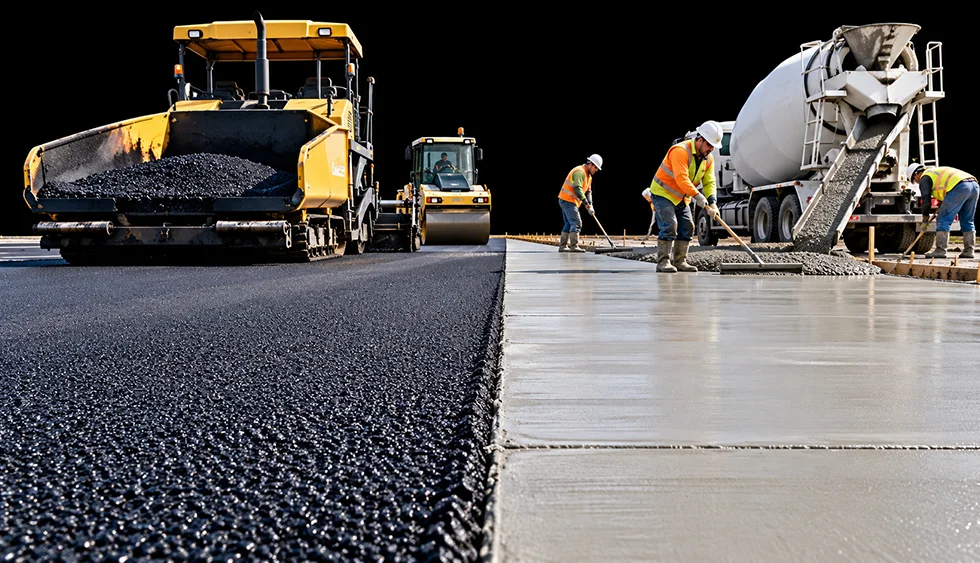
Planning a new parking lot, or replacing a worn one? The surface you choose will have a big impact on your upfront costs, how long the lot lasts, how much upkeep it needs and how it handles Lower Mainland weather. Asphalt and concrete are the two main options, and each has their own advantages for different properties.
This guide covers a comparison of both materials, including cost, lifespan, maintenance, traffic loads, appearance and environmental impact to help you make an informed choice.
Make the Right Choice for Your Parking Lot Construction
There is no single right answer for every property. A small retail lot, an apartment complex and a heavy-truck yard all have different needs. If you’re unsure which material fits, get a free quote from Nasib’s Asphalt and our team will walk you through the options for your site.
Parking Lot Construction Costs: Asphalt vs. Concrete
Cost is always the first question. Asphalt is usually cheaper to install, can be laid quickly, and makes your lot available to use sooner. Concrete costs more to install, but requires less maintenance over its lifetime.
To really compare them, you need to look at more than just the installation cost:
- Installation: Asphalt is lower. Concrete is higher.
- Upkeep: Asphalt needs regular sealcoating. Concrete needs less frequent attention.
- Repairs: Asphalt patches blend in easily. Concrete repairs are harder and more visible.
For many Vancouver area businesses and strata properties, lower initial cost and ease of repair are factors that sway them toward asphalt. But if a proprietor is in it for the long haul, and has the budget to front more cash at the outset, concrete is often the preferred surface material.
Lifespan of Asphalt vs. Concrete
A well-installed asphalt surface can last 15-20 years with proper maintenance. Commercial lots with heavy traffic may need to be resurfaced every 10-15 years. Concrete usually lasts longer than asphalt and often lasts 25 or 30 years.
Three factors determine the lifespan of asphalt or concrete surfaces:
- Base preparation. A properly graded, compacted base matters most.
- Drainage. Standing water is the biggest enemy of asphalt.
- Maintenance. Regular sealcoating, crack sealing and timely patching extend life significantly.
Regular Maintenance Needs
Asphalt requires more maintenance. Every two to three years, the asphalt should be sealed to protect it from water and sun damage, preserve its dark color, and prevent cracks from getting worse. It’s easy to fill small cracks and potholes.
Concrete doesn’t need to be maintained as often, but when it develops cracks or a slab settles, it usually has to be repaired in a more labor-intensive way, and the resulting patch is often noticeable.
Either way, sweeping, drainage checks and line painting keep a lot safe and organized. If your existing lot is already worn, see our asphalt maintenance services before deciding whether you need repairs or full replacement.
How Climate Affects Your Parking Lot Surface in the Lower Mainland
Vancouver, Richmond and Burnaby get plenty of rain, mild winters and occasional freeze-thaw cycles. That matters because water is what damages pavement most.
- Asphalt is flexible, so it handles freeze-thaw movement well and is less prone to cracking in cold snaps.
- Concrete can crack in freeze-thaw conditions if control joints and the base aren’t done properly.
- Drainage matters for both. Good grading and drainage design keep water from pooling, undermining the base and causing potholes.
This is why local knowledge of the soils, drainage patterns and weather of the Lower Mainland makes a real difference in how long your lot holds up.
Traffic Loads: Which Material Handles What?
Asphalt is great for standard commercial traffic: passenger cars, delivery trucks, and normal customer traffic. It provides a smooth surface, installs quickly, and causes minimum disruption.
Concrete is often favored for more demanding traffic or heavy concentrations of traffic, such as on loading docks or in multiple-story buildings. Asphalt can sometimes be used for heavily trafficked areas with the right base installation, but you should probably get an estimate based on your anticipated traffic. A site inspection is the best way to determine that.
Appearance and Surface Customization
Asphalt provides a smooth and uniform surface, which creates a high-quality black color that effectively conceals stains and marks from oil and tires, giving a well-kept appearance, even on a busy lot. New line painting will stand out sharply against this dark background, ensuring safety and organization.
Concrete can provide more color and variation, including patterned options, but for commercial lots, it is more about the function that the surface serves. In this case, the simple beauty of asphalt is more than enough to provide the needed appeal.
Environmental Impact of Asphalt vs. Concrete
Both materials are recyclable. Asphalt is among the most reused paving materials as old pavement can be crushed and reused in new concrete mixes to reduce waste. While concrete reflects more heat and is therefore better than dark asphalt variants at lowering temperatures in cities, its production requires more resources. When choosing between the two materials, consider their effect on the environment and the region to which they belong, as well as long-time use and cost.
How Long Before You Can Use a New Parking Lot?
This is a big factor for businesses that can’t afford long closures.
- Asphalt: Typically ready for traffic after a 24 to 72 hour curing period. Full curing can take up to a year, but the lot is usable long before then.
- Concrete: Takes longer to cure before vehicles can drive on it, often a week or more.
For retail, condo and school properties, asphalt’s faster turnaround means less disruption for tenants, customers and students.
Choosing the Right Contractor for Your Parking Lot in Vancouver
Even the best material can fail due to inferior workmanship. Most premature failures are caused by hasty site assessment, grading or base preparation, rather than to the asphalt itself. When comparing contractors, consider:
- In-house crews, so the team that quotes your job also completes it
- Local experience with Lower Mainland soils, drainage and weather
- Clear, upfront pricing with no surprise charges
- Proper licensing and insurance
- Warranty coverage, with the details in writing
- Experience with your project size, from small patches to large commercial lots
Nasib’s Asphalt Paving handles residential, commercial and maintenance paving with its own crews. For larger properties, see our commercial asphalt paving in Richmond, or if your site is in Burnaby, our commercial asphalt paving in Burnaby page.