
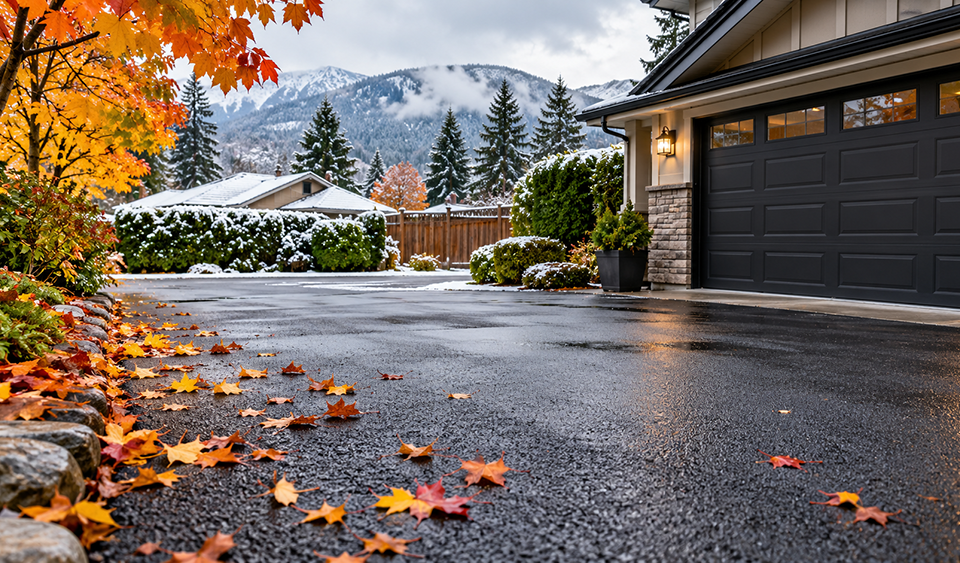
How to Prepare Your Asphalt Driveway for Winter in Vancouver
The best practice for preparing an asphalt driveway for the winter is to remove debris, seal or repair cracks, address drainage issues, and apply a sealant if needed. Water is the primary concern when it comes to winterizing asphalt, so the main purpose of the job is to prevent it from getting inside the material’s pores. This is a list of the most common actions required to winterize asphalt driveways in the Lower Mainland area.
Why Fall Is the Time to Act
Our wet fall and winter weather is rough on asphalt. Water gets in the cracks, and when it freezes it expands to make bigger cracks. Over the course of several cycles of freezing and thawing, a tiny crack can turn into a huge pothole.
Asphalt tends to handle the cold better than most surfaces, just as long as the surface is sound. Fixing up little things now will save you much more expensive repairs in the spring.
Your Fall Driveway Checklist
1. Clear the surface.
Remove leaves, dirt, and other debris. Wet leaves can cling to the asphalt and leave stains. Clear away the edges in order to allow water to drain.
2. Walk the driveway and look for cracks.
Look for hairline cracks, larger cracks, crumbling edges, and sunken areas. Take pictures so that you can monitor their progress. If you’re not sure what you’re seeing, our guide to common asphalt driveway problems and their fixes explains what each type of damage means.
3. Check where the water goes.
After a heavy rainstorm, look for areas where water is pooling within a few hours. Standing water is particularly damaging to asphalt and can indicate a problem with drainage or an underlying issue rather than a surface-level one in the driveway. Check that downspouts and gutters aren’t draining directly onto the driveway’s surface.
4. Patch potholes and seal cracks.
Fill small problems before freezing weather. Ignoring them lets water reach the base underneath, which is where the real damage starts. Our asphalt paving maintenance service covers patching, crack sealing and drainage repair for pavement that doesn’t need replacing yet.
5. Sealcoat if it’s due.
Sealcoating should be performed every two to three years. It is a protective measure and does not address repairs. It is best suited for faded pavement with only a few potholes that do not extend throughout the surface. The pavement should be dry but not hot, so make sure to ask your contractor if it is too late in the season to perform the procedure.
6. Plan for snow and ice.
Decide in advance how you’ll clear snow and treat ice, so you’re not improvising during a cold snap. Our tips on salting your driveway safely will help you keep it safe without making a mess of the surface.
Repair or Repave?
Not every driveway can be saved with maintenance. As a general guide:
- Minor wear and fading: sealcoating
- A few potholes or cracked areas, with a sound base: patching and crack sealing
- Widespread cracking, sinking areas or recurring drainage problems: the base has likely failed, and repaving is the better long-term fix
If your driveway falls into the last group, a new asphalt driveway is usually more cost-effective than repeated repairs. A good contractor will tell you honestly which category you’re in rather than pushing the biggest job.
Property Managers: Don’t Forget the Parking Lot
Winter wear is even harder on parking lots, where heavier traffic speeds up damage. Trip hazards, potholes and pooled water are also a liability concern for strata and commercial property owners. Fall is a good time to have your lot assessed, and our commercial asphalt paving team schedules work to minimize disruption to tenants and customers. Before you commit to a project, read about the top mistakes to avoid when paving commercial spaces.
Local Help in Richmond and Burnaby
We work throughout Vancouver, with local crews who understand the Lower Mainland’s soils, drainage and freeze-thaw patterns. If you’re in Richmond or Burnaby, we can inspect your driveway and recommend only what it needs.